Category Archives: Patchwork Projects

Salamander: Applique

Now that the edges are turned, I use a dab of ‘Roxanne Glue-Baste-It’ on seam allowance and each ‘twirl’ of seams. It washes out and only a tiny amount is needed to hold the block in place.

Dabs of glue on half of the block.

Dabs of glue on half of the block.

By carefully flipping this half over onto the background and carefully smoothing out the fabric, it is easy to check that no seams have been twisted in the process. The second half is then temporarily stuck down.

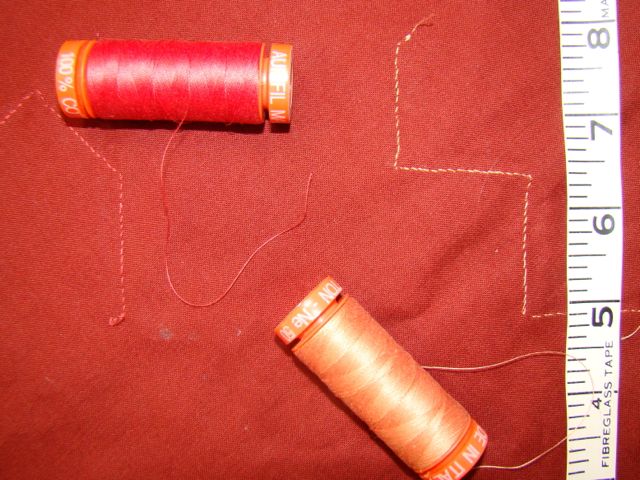
Threads for applique.

Threads for applique.

I love using Aurafil 50wt threads for appliqué, they are fine and blend well with the top fabric. This is my personal preference, as I have tried using the silk threads, but dealing with a thread that is almost invisible to see when stitching, and has a life of it’s own, is not for me. What are your favourite appliqué threads?

Hand stitching is usually at night, under a daylight, while watching something on the ‘box’. Hence the stitching is not always perfect, and even if there is no such thing as the ‘Quilt Police’, I at least aim for a consistency that I am happy with. I’ve given up trying to get them straight and have settled for bumpy bits. I do so admire the many women from the past who  stitched without electricity to light their work!
Applique as seen from the back.

Applique as seen from the back.

Back to stitching!

Salamander: Turned Edge

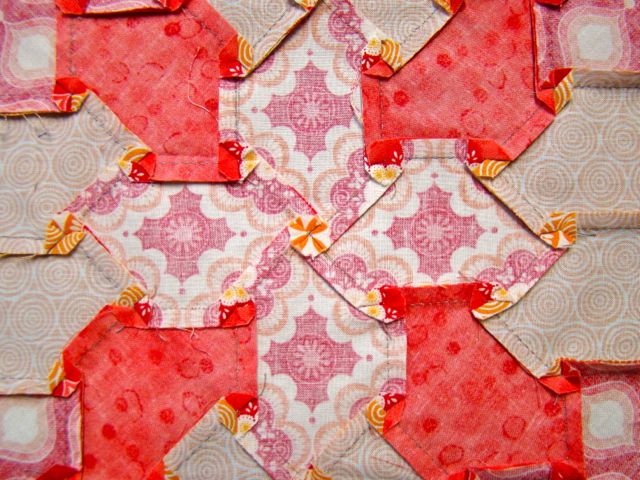
Time to update what’s happening with the ‘Salamander’ Patchwork of the Crosses runner. Now that the three hand pieced blocks are finished, it’s time to turn the edges ready for hand appliqué to the background. All seams are ironed into a rotating ‘whirligig’ pattern, beginning from the centre of the block. This helps avoid a ‘hill’ of fabric at the ‘Y’ join, so the block lays flat.

Salamander seams

Salamander seams

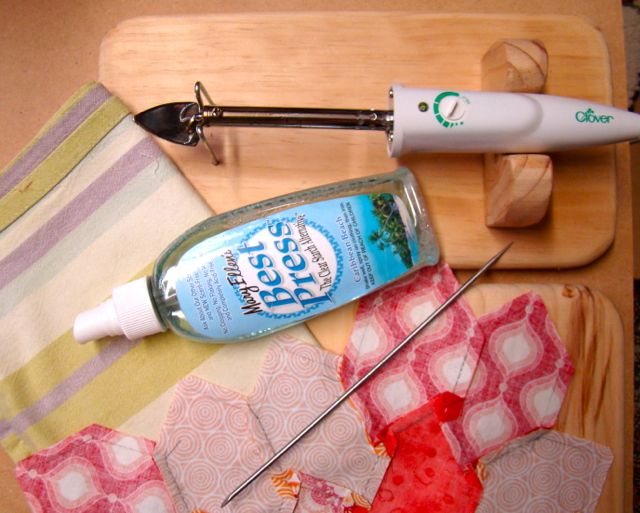
The tools I use for this turned edge technique include a timber board covered with an old tea towel; ‘Mary Ellen’s Best Press’; the ‘Appliquick’ tools, and a Clover mini-iron.

Tools for the turned edge technique.

Tools for the turned edge technique.

The edges of the block are sprayed a few at a time, and using fingers and the Appliquick, the edges are folded back on the seam allowance line, and ironed to a crisp crease.

Spray, turn, iron.

Spray, turn, iron.

Turned edges.

Turned edges.

Using a domestic iron, a final press dries all the spray and firms the turned edge ready for stitching down.

Final iron with domestic iron.

Final iron with domestic iron.

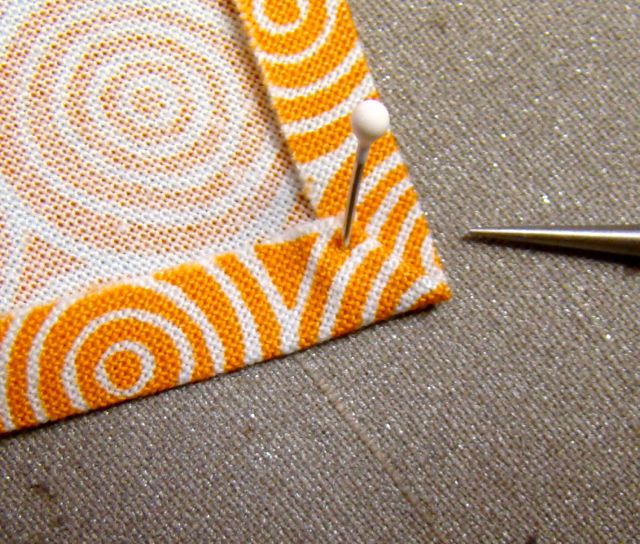
However, there are occaisional ‘rabbit ears’ two or three threads in thickness that will stick out past the edge of the seam allowance on some corners, depending on how it was folded.

Mini 'rabbit ears' sticking out.

Mini ‘rabbit ears’ sticking out.

When appliquéing the block to the background, that little ‘ear’ is tucked back in at a 45 degree angle using the sewing needle, as the block is stitched down.

Tucked ears ready to appliqué.

Tucked ears ready to appliqué.

Drop by later for another ‘Salamander’ post about the next step – appliqué.

‘Floating Duo’

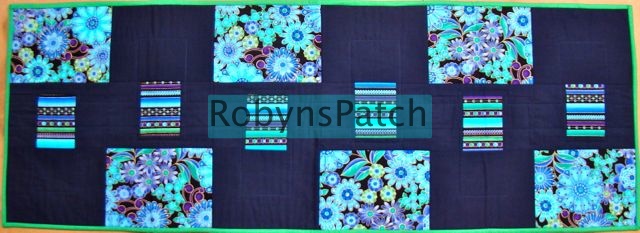
Another very easy to construct table runner is finished! The rich fabric pattern is set simply against a navy background, but what gives it a bit of a zing is the bright green binding. Quilting was a breeze, two lines in the background from end to end making a shape around the small patches. What I learnt with this project, was about quilt labels. In the Victorian Quilters handbook, there is a suggestion as to where to put labels on the back of a quilt. Apparently they go on the bottom left hand corner as you stand and face the back of the quilt. So from now on, that’s where the labels will go!

'Floating Duo'

‘Floating Duo’

Where do you put your quilt labels?


Would you make these colour choices?

‘Does this go with that?”, ‘What do you reckon?’, are just some of the ways patchwork quilters make decisions about colour choices for projects. Consulting colleagues in a class frequently brings out alternative ideas that surprise and delight. Sometimes a quiet hush can be interpreted as ‘Whatever were you thinking’ and you just know to ditch that option.

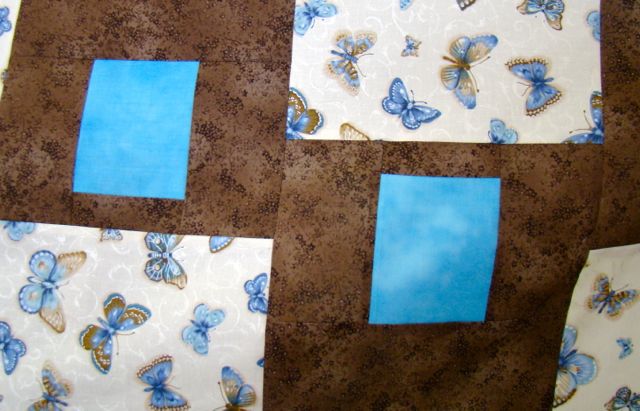
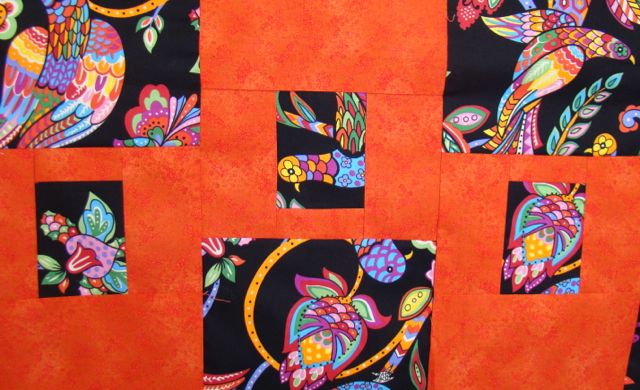
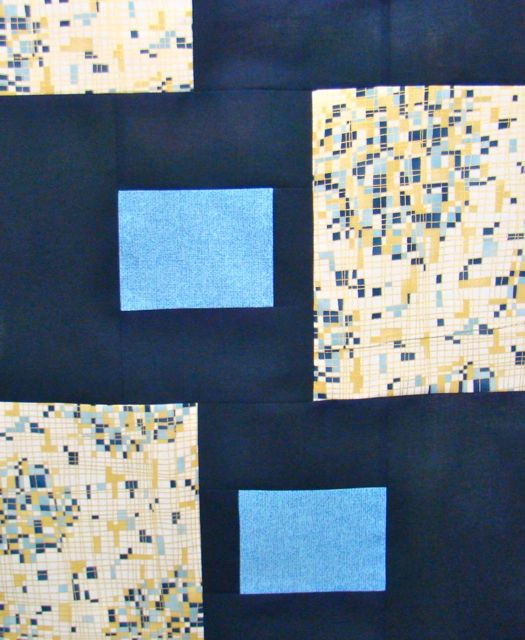
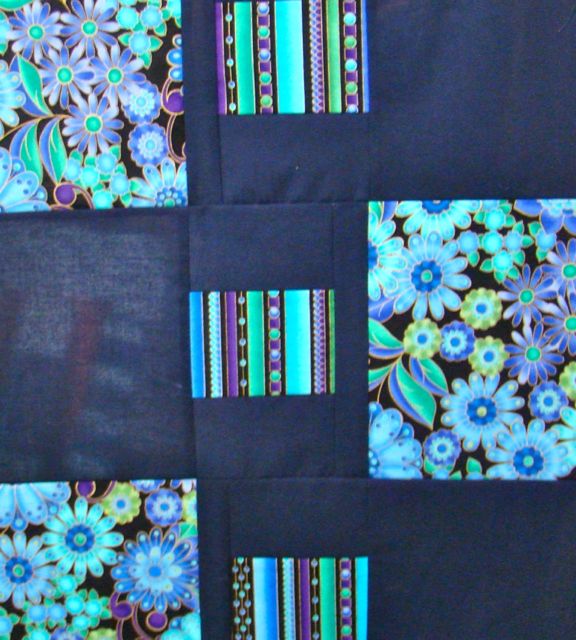
For the quick and easy table runner pattern ‘Paola’s Runner’, the colour choice technique used by each patchworker was to pull colours out of a feature fabric to decide the contrast and background.

Can you ‘see’ the thinking behind each choice that these ladies made?

Betty.

Betty.

Heather.

Heather.

Leanne.

Leanne.

Maria.

Maria.

Maria just loves the Clarice Cliff fabrics!

Pam.

Pam.

Dianne.

Dianne.

Dianne was so pleased to feature this print. It’s been in her stash just waiting for it’s opportunity to be showcased.

Sue.

Sue.

Robyn.

Robyn.

Sue and I chose the same background fabric and yet when set against different feature fabrics, the effect is different.

Do you agree with the choices of colour? Do any of these appeal to you?